We need your help! Click here and answer a short questionnaire to help improve the platform.
TITLE
OBJECTIVE
| ACRONYM | GRASSMARGINS |
|---|---|
| CONTACT POINT | Mairéad Esmonde |
| CONTACT MEANS | mairead.esmonde@teagasc.ie |
| FUNDING SOURCE |
other EU |
| WEBSITE | https://cordis.europa.eu/project/rcn/101133/factsheet/en |
| REPORT | https://cordis.europa.eu/project/rcn/101133/reporting/en |
| CROP CATEGORIES | |
Rate this Innovation
| PROJECT DURATION | 2011-2015 |
|---|---|
| PROJECT TYPE | EU |
| NUTS3 | |
| CROP CATEGORIES |
Lignocellulosic |
| KEYWORDS |
Marginal lands Miscanthus |
| OTHER GEOLOCATION | |
|---|---|
| FUNDING SOURCE | other EU |
| FINAL REPORT | |
| TOPICS |
Genetics & breeding |
| COORDINATOR |
TEAGASC - Agriculture and food development authority |
|---|---|
| PARTNERS |
TRINITY COLLEGE DUBLIN SVERIGES LANTBRUKSUNIVERSITET (SE) AARHUS UNIVERSITET (DK) TINPLANT BIOTECHNIK UND PFLANZENVERMEHRUNG GMBH (DE) SHANGHAI INSTITUTES FOR BIOLOGICAL SCIENCES, CHINESE ACADEMY OF SCIENCES (CN) The Establishment of the Russian Academy of Sciences Institute of Cytology and Genetics, Siberian Branch of the Russian Academy of Sciences (RU) KNOWLEDGE NOW LIMITED (UK) INSTYTUT GENETYKI ROSLIN POLSKIEJ AKADEMI NAUK (PL) DLF SEEDS AS (DK) UNIVERSITY OF SHEFFIELD ROYAL CHARTER (UK) THE CIRCA GROUP EUROPE LIMITED (IE) |
- CORDIS_article_92681-growing-grasses-on-the-margins-the-route-to-cost-effective-biomass-crops_de.pdf
- CORDIS_article_92681-growing-grasses-on-the-margins-the-route-to-cost-effective-biomass-crops_en.pdf
- CORDIS_article_92681-growing-grasses-on-the-margins-the-route-to-cost-effective-biomass-crops_es.pdf
- CORDIS_article_92681-growing-grasses-on-the-margins-the-route-to-cost-effective-biomass-crops_fr.pdf
- CORDIS_article_92681-growing-grasses-on-the-margins-the-route-to-cost-effective-biomass-crops_it.pdf
- CORDIS_article_92681-growing-grasses-on-the-margins-the-route-to-cost-effective-biomass-crops_pl.pdf
- CORDIS_project_289461_en.pdf
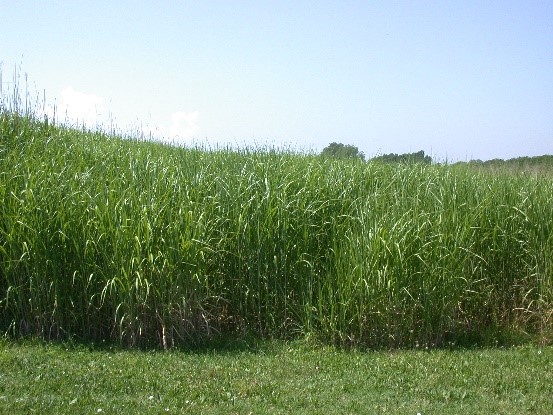
Perennial grasses, which once established can be harvested and re-grow annually for many decades, have a number of other beneficial characteristics which suit them as biomass crops. These include high resource use efficiency, high productivity, good environmental qualities and a wide range of end uses. Environmental benefits include high rates of soil carbon sequestration, enhanced biodiversity and soil stabilisation. Furthermore, perennial grasses naturally colonise marginal areas of land which often impose severe restrictions on the growth of vegetation. Marginal land is defined as land of poor quality for agriculture and which yields poor returns for the farmer. The aim of this project is to identify, characterize and develop novel varieties of C3 grasses (Dactylis glomerata, Festuca arundinacea and Phalaris arundinacea) and the C4 genus Miscanthus that show high and stable productivity and require the minimum of additional inputs when grown on different forms of marginal land. In broad terms the work will contribute to overcoming specific bottlenecks along the whole perennial grass-based production chain. In particular it will use modelling to identify the optimal characteristics and geographical distribution of perennial grasses of potential use for biomass production, undertake pre-breeding of novel varieties, investigate stress tolerance and develop drying characteristics following harvest. The consortium assembled to achieve these outputs consists of 12 partners from eight countries representing Northern, Central and Western Europe and partners from Russia and China and involves three SME partners.





Disclaimer excluding Agency responsibility. Any dissemination of results must indicate that it reflects only the author's view and that the Agency is not responsible for any use that may be made of the information it contains This license applies to all contents on the website except where explicitly indicated on the page or in the document and except for contents aggregated from other websites, in which case the original licensing applies
Be the first to comment this!
Add new comment{{ comment.nickname }} at {{ comment.created_at }}
{{ comment.title }}
{{ comment.comment }}